
Sarakhs is one of the border crossings that matter most on the China–Iran railway, and the day a box spends there can decide whether the rest of the journey runs to plan. Clearance that flows pushes the shipment forward; clearance that stalls holds it for several days. This article works through Sarakhs in four phases, from preparation before arrival to release and collection, then sets out the documents that decide the outcome, a table of common hold-ups with their real causes, and how to judge buffer days in peak season.
1. Where Sarakhs sits on the corridor
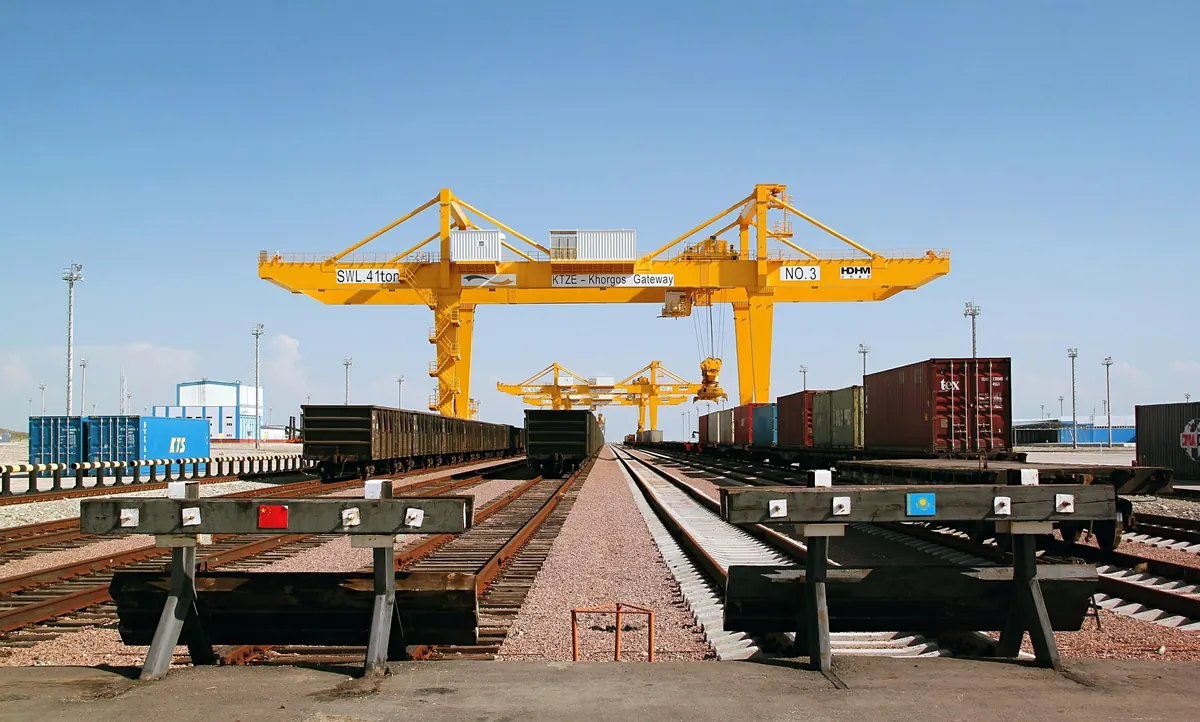
Sarakhs is in north-eastern Iran, facing Serakhs on the Turkmen side; it is the railway crossing between the two countries. Freight trains coming south through Central Asia complete their border handover and their entry declaration here. Two features define the place. As a rail crossing, containers have to be transhipped between the wide gauge and the standard gauge. At the same time it performs the entry declaration function, so rail operations and customs formalities run alongside each other.
Which countries a train passes through and where the gauges change is set out under the China–Iran railway route. The live operations and frequent questions for this particular crossing are on the Sarakhs border page, and the door-to-door structure of the whole route sits under China to Iran rail freight (FCL).
2. Preparation before arrival
Whether Sarakhs goes smoothly is largely settled before the train arrives. The rule is short: the documents must be complete before the cargo arrives, and they must agree with each other. While the train is still running through the transit country, the file has to be ready. The four phases, in outline, look like this.
| Phase | Main operation | Smooth duration | Main variable |
|---|---|---|---|
| Preparation before arrival | Documents complete and pre-checked | Done before dispatch | Consistency of the file |
| Transhipment on the wide gauge | Lifting between wide and standard gauge | 1–2 days | Wagon supply, terminal queue |
| Declaration filing | Entry declaration and inspection | 1–3 days | Classification, value, inspection |
| Release and collection | Duty settled, goods released and collected | 1–2 days | Prompt collection and settlement |
The document checklist usually runs as follows: a packing list showing piece count, gross weight, net weight and volume; a commercial invoice whose price, trade term and payment method agree with the contract; the trade contract itself, as evidence that the price is genuine; a certificate of origin, to confirm origin and any preferential rate that depends on it; an import permit, required in advance for some categories; and the rail waybill together with any TIR or equivalent transit document carried with the train. The description, quantity, value and party details on all of them have to line up. From experience, replacing a document after arrival is the most expensive option available, because wagons and yard space are billed by the day.
3. Transhipment on the wide gauge
Once the train reaches the crossing, the containers are transhipped from the wide gauge to the standard gauge. The operation itself is simple, but the queue and the supply of transfer wagons can stretch it. One or two days is a good run; three to five days is not unusual when work is concentrated.
Two things decide the duration: how many transfer wagons are available on the day, and the order in which the terminal takes trains off the queue. Neither is under the control of the shipper, which is why the buffer in section 6 matters more than any promise about the transhipment step.
4. Declaration, release and collection
Declaration is where Sarakhs most often stalls. The declared elements turn on classification, HS code, declared value and the details of the parties. A classification that does not fit will be sent back for amendment; a value that sits low against comparable goods may trigger inspection or reassessment.
Once the declaration passes and the duty is settled, customs release the goods and they can be collected. The critical point here is promptness. Storage and demurrage begin to accrue from the day the cargo arrives, so every day of delay raises the cost. In practice the clearance agent and the collection party at the two ends should work the same day, so a release is not left waiting for someone to act.
5. Common hold-ups, real reasons, and advance actions
The table below aligns the hold-ups we see most often with their real cause and the action that avoids them.
| Hold-up | Real reason | Action to take in advance |
|---|---|---|
| Classification sent back for amendment | Description too broad to match the HS code | Write the description to a specific code before dispatch and attach a product description |
| Value questioned | Declared price far from comparable goods, with no supporting evidence | Keep contract, invoice and payment record consistent and on file |
| Documents re-filed repeatedly | Packing list, invoice and waybill disagree on one field | Run one cross-check before dispatch and update every version after any change |
| Import permit required | Category is controlled and this was not confirmed | Ask the consignee before booking and allow time for the permit |
| Held after inspection | Communication and re-filing fall out of step | Name a contact at each end and respond on the day of inspection |
Every one of these starts before dispatch. No amount of on-site technique avoids them; only preparation does.
6. Buffer days and peak-season queues
Allow a buffer at this crossing. In normal periods, three to five days from arrival to collection is a sound planning figure. When work is concentrated or around holidays, seven days or more is the safer assumption. The test is simple: look at the current supply of wagons and the terminal queue, not at an average. A peak-season queue is not an operating mistake; it is a temporary mismatch between capacity and workload, and it can only be absorbed by earlier dispatch and a larger buffer.
Get current rates and transit times
Send us the commodity, pieces, weight and dimensions, the origin station and the destination. We will return a comparison built on current schedules, border conditions and clearance times, with a validity window, and we will break out the Sarakhs leg separately so you can plan the delivery date around it.
7. Frequently asked questions
How long does clearance at Sarakhs usually take?
In normal periods, about three to five days from arrival to collection: transhipment one to two days, declaration one to three days, release and collection one to two days. When work is concentrated, plan on seven days or more, and confirm against the current border status.
What is most likely to hold a box at Sarakhs?
The most common are a classification that does not fit and is sent back, a questioned value, and a mismatch between packing list, invoice and waybill. All three are settled before dispatch, and all three are avoided by one careful cross-check of the file.
Why allow buffer days rather than rely on the average?
Because the workload at the crossing moves. Transhipment queues and inspection times are not controlled by the shipper, so a buffer keeps the risk of that movement on your own side instead of passing it to your customer downstream.
Related lanes
- Sarakhs border crossing — live operations and clearance notes for this gateway
- China–Iran railway route — corridor structure and gauge-change points
- China to Iran rail freight (FCL) — the door-to-door plan and corridor choice
- Incheh Borun border crossing — the other entry gateway, with its own operating notes