
Eastbound return trains from Europe, Russia, Central Asia and Iran. Containers have to come back, so return space is keen and the transit beats ocean freight.
Russia return train: Moscow, St. Petersburg, Krasnoyarsk and Irkutsk to China for imported timber, pulp, food, fertiliser and rapeseed oil. Entry via Manzhouli or Erenhot, 14–20 days to Xi'an, with Russian export clearance, Chinese import clearance and domestic delivery.
View lane →Central Asia return train: Kazakhstan and Uzbekistan to China for imported wheat, flour, edible oil, cotton, cotton yarn, non-ferrous metals and minerals. Entry via Khorgos or Alashankou, 10–16 days to Xi'an, with export clearance, Chinese import clearance and delivery.
View lane →Iran return train: Tehran to Xi'an for imported ore, sheepskin and hide, dried fruit, saffron and food. Exit via Sarakhs or Incheh Borun, entry via Khorgos, 18–26 days to Xi'an, with Iranian export clearance, Chinese import clearance and domestic delivery.
View lane →Return trains are the dividend of the container cycle: space coming back is usually priced sharper than space going out, and the transit is far quicker than ocean freight. We put the four eastbound corridors — Europe, Russia, Central Asia and Iran — in one place and help you pick the right one for your origin and commodity. Overseas collection, export declaration, the block train, Chinese import clearance and nationwide delivery, all on one file.
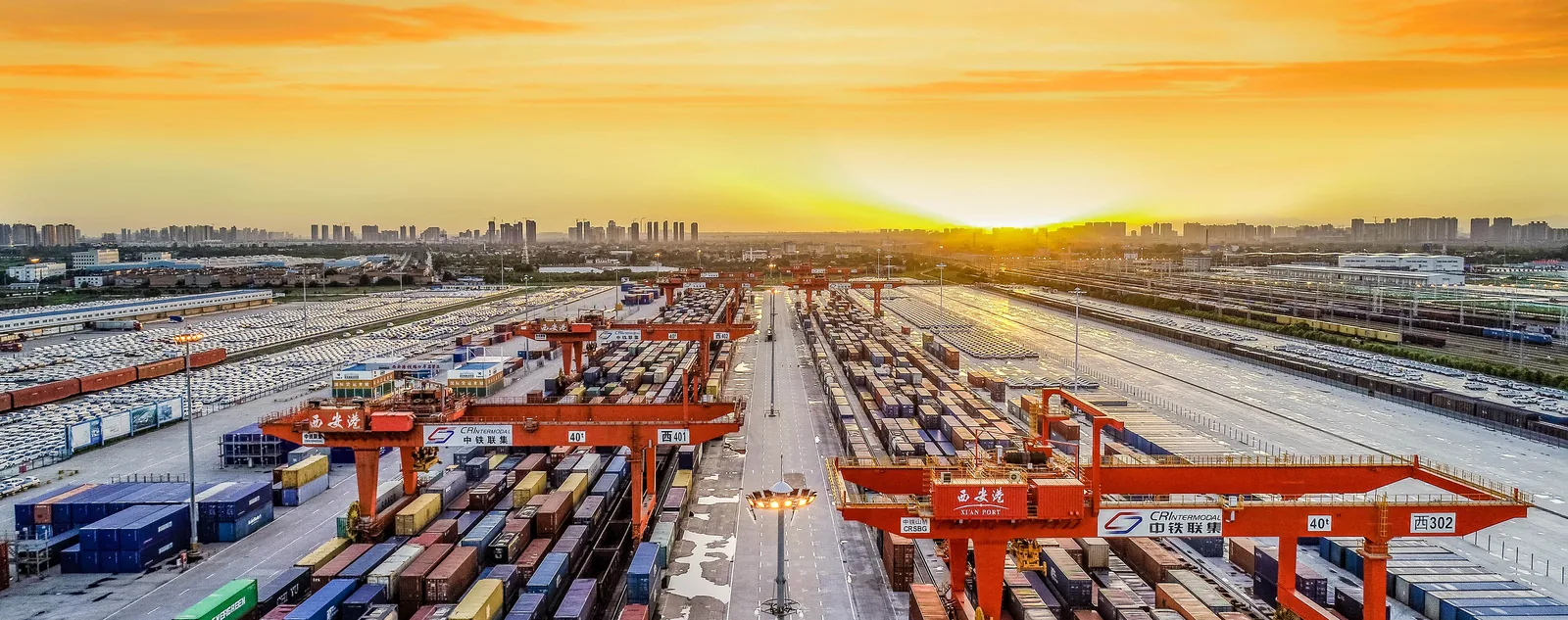
An eastbound return is not one thing. Europe, Russia, Central Asia and Iran differ completely in border crossing, gauge change, admission rules and import commodities. Put them in one table and compare on price alone and you will get the cost wrong. We break them apart.
| Corridor | Main origins | Chinese station | Indicative transit | Typical imports | Page |
|---|---|---|---|---|---|
| Europe → China | Milan, Duisburg, Hamburg, Malaszewicze, Prague, Budapest | Xi'an (nationwide distribution) | 11–17 days | Furniture, auto parts, cosmetics, machinery, food | Eastbound Europe → |
| Russia → China | Moscow / Selyatino, Yekaterinburg, Krasnoyarsk, Irkutsk, Vladivostok | Xi'an, Chengdu, Chongqing | 14–20 days | Timber and logs, oils and grain, meat, seafood, fertiliser | Russia return train → |
| Central Asia → China | Almaty, Tashkent, Samarkand, Andijan, Bishkek, Dushanbe | Xi'an, Urumqi, Chengdu | 12–18 days | Cotton and cotton yarn, grain and pulses, dried fruit, ore and non-ferrous metal | Central Asia return train → |
| Iran → China | Tehran, Aprin dry port | Xi'an (extendable to Yiwu, Chongqing) | 20–28 days | Iron ore, zinc and copper, sheepskin, dried fruit, pistachio, carpets | Iran return train → |
Transit and commodities above are indicative. The live move follows the current schedule, border throughput and the booking confirmation. If your origin or commodity is not listed, we can assess whether a plan exists.
One origin can often reach China on two different return corridors. The table below is the comparison logic we use internally. It is published so you can make a first pass yourself.
| Dimension | Europe → China | Russia → China | Central Asia → China | Iran → China |
|---|---|---|---|---|
| Border entry | Alashankou / Khorgos / Erenhot | Manzhouli / Erenhot / Suifenhe | Khorgos / Alashankou | Khorgos / Alashankou (or Caspian rail-sea-rail) |
| Gauge change | Malaszewicze / Brest broad gauge, one change | Manzhouli broad gauge, one change | Kazakh broad gauge to the border, one change | Turkmen / Kazakh change, or Caspian ferry |
| Transit | 11–17 days | 14–20 days | 12–18 days | 20–28 days |
| Return rate | Clear advantage (high eastbound volume) | Advantage, steady schedule | Advantage, frequent departures | Tighter space, book early |
| Main risk | Wood packaging IPPC, auto parts CCC, cosmetics registration | Timber phytosanitary, grain quarantine permits | Cotton and yarn quarantine, dried fruit food admission | Animal product quarantine approval, sanction-related settlement |
| Best for | Furniture / auto parts / consumer goods importers buying in Europe | Timber, oils and food importers | Textile raw material, agricultural and ore importers | Ore, hides and dried fruit importers |
Bank settlement and compliance for the Iran corridor are more specific. Confirm the workable route with us before signing.
Most import risk is not in transport. It is in admission and documents. The table is organised by commodity so you can start preparing at the purchasing stage.
| Commodity | Main origin | Clearance and compliance points |
|---|---|---|
| Timber and logs | Russia | Official phytosanitary certificate from the exporting country stating the Latin name, whether barked, and treatment parameters. Logs also need an inbound animal and plant quarantine permit obtained in advance. Wood packaging must carry the IPPC mark. |
| Grain and oilseeds | Russia, Central Asia | The overseas manufacturer must be registered with the GACC and the Chinese importer filed. Some categories need an inbound animal and plant quarantine permit. |
| Cotton and cotton yarn | Central Asia (Uzbekistan, Tajikistan) | Cotton is a plant product and needs quarantine approval plus an official certificate from the exporting country. Yarn is declared as textiles — composition and count details matter. |
| Furniture and home goods | Europe (Milan, Malaszewicze) | Watch the phytosanitary rules for wooden parts. Declared description, material and quantity must match the actual cargo exactly. |
| Auto parts | Europe (Duisburg, Budapest) | Brake pads, lamps and other safety parts may fall within CCC certification scope. The certification must be done before departure. |
| Cosmetics | Europe | Import registration, company filing and Chinese labelling to national standard. |
| Sheepskin and hides | Iran | Animal products need quarantine approval and an official veterinary (sanitary) certificate from the exporting country. |
| Ore and non-ferrous metal | Iran, Central Asia | Declared as mineral products with complete composition, content and processing elements. Solid-waste status must be determined in advance; some categories carry radioactivity testing requirements. |
Specific regulatory requirements follow current Chinese customs rules and the actual cargo on the shipment. We issue a document checklist and an admission pre-check opinion before departure.
Operationally nothing. The difference is how the rate forms. A return train is space on containers that have to go back to China after discharge abroad. Because the platform needs to get the boxes home, that space is usually keener than westbound. For an importer, that is real cost room.
German cargo normally goes on the Europe corridor, departing Duisburg or Hamburg, changing gauge at Malaszewicze / Brest, arriving Xi'an in 11–13 days. Cargo in eastern Germany or Poland is better loaded at Malaszewicze, about 11 days. The live answer depends on the current schedule — send us the factory address and we will compare.
Yes. On the Europe corridor we have long-standing agents in Germany, Italy, Poland, Hungary and Czechia, trucking from the factory and loading at the terminal nearest the cargo. For Russia, Central Asia and Iran the collection radius depends on the city — send us the pickup address and we will confirm.
Both. We provide import customs clearance at the Chinese border, including the import declaration, duty and VAT payment and quarantine liaison, then onward domestic delivery. We can also do clearance only, or transport only, depending on what you need.
Three places. First, wood packaging without a compliant IPPC mark. Second, a mismatch in description, quantity or value across the invoice, packing list, waybill and certificate of origin. Third, quarantine-controlled goods — timber, grain, cotton, hides — without the permit and official certificate obtained in advance. All three cause border hold-ups or even return of the cargo, which is why we pre-check documents before departure.
Usually keener, but the spread moves with commodity, container type, direction and schedule. It cannot be reduced to "the return is always cheaper". Send the commodity, volume and pickup location and we will quote the current rate so you can compare properly.